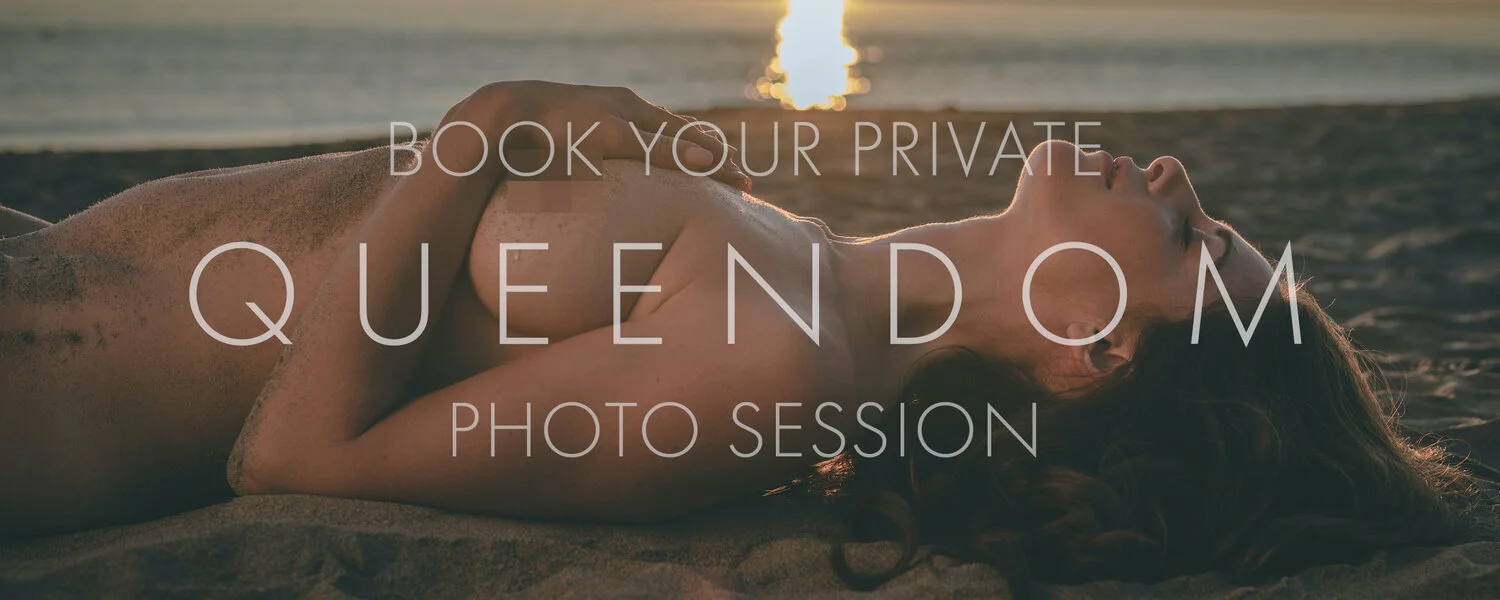
A Society’s Ideal of Beauty And Its Influence
by Melanie Sievernich
Shortly after I began photographing women and while witnessing—photo shoot after photo shoot—how we all relentlessly shame ourselves and our bodies, two questions arose in me that wouldn’t leave: “What is beauty? And why is it so hard to love ourselves?”
As I dived deep into researching beauty, I soon realized that there is no actual fact that defines if one is beautiful or not. Every era in history has got its own ideal of beauty. An ideal that changes as we change as a society.
What is a fact, however, and what we cannot escape is influence. Influence is ever-present; if we like it or not. Because whatever we are exposed to long and intense enough influences us, as it sinks deep down into our subconscious where it begins to form our reality. So it doesn’t come by surprise that, in the age of social media, we have turned the capacity to have an effect on people and their lifestyles into a profession: namely being an “influencer”.
Influence mustn’t be a bad thing. Good and bad are oftentimes no more than ideas construed by our society. Ideas that turn into an ideal; the ideal of beauty in this very case.
A simple example of how easily we fall victim to influence:
For quite some time I kept saying that there is no way I would ever do a sport like CrossFit. Repeatedly I protested, stating that I am a woman and that I would not ever in life touch a barbell. That it isn’t feminine and that I wanted a slim and not a muscular body.
As life sometimes plays funny tricks on us, I ended up joining CrossFit after all. At first, I laughed at myself, as I was probably the most unlikely woman to be lifting heavy weights. But I loved it. And soon those strong girl’s bodies became normal to me.
A few weeks into my CrossFit journey, I caught myself thinking, ‘Look at those skinny arms and legs,’ while sitting at a café, watching a group of girls. What had happened? Had my personal taste suddenly changed? What is personal taste and where does it stem from, is what we should rather ask ourselves. Because all that had happened was that my perspective had changed as I was now regularly exposed to fitter girls. And, again, whatever surrounds us long and intense enough, will sink deep down into our subconscious where it forms our reality. To make it even clearer: whatever surrounds us becomes a part of us.
As said before, influence isn’t necessarily good or bad. Often, it simply is. Our job is to be aware of its existence. A muscular body isn’t prettier or better than a non-muscular body, or vice versa. They are simply two different body types and two different ideals; ideals that can shift and change any moment.
I realized, what influences and thus torments women the most is how we are being presented in mainstream and social media. We are being sold the ideal of a woman that is, in most cases, unachievable due to its unrealistic and simply fake and false image. Highly edited and retouched photography sells us an illusion that we buy for reality. Even the numerous plus size models that nowadays grace glossy fashion magazines and beauty campaigns hardly ever show a trace of cellulite. And don’t even get me started on phone filters...
When I first started photography, I fell head over heels in love with editing. It was my mission, then, to show women that they, too, can look like the girl on the cover. Because let’s be honest here: not even the girl on the cover looks like the girl on the cover in real life. But when I realized that this fake perfection was exactly what is hurting women and that I was sending them the message that their actual look wasn’t good enough, I decided to no longer edit and retouch my photography. Yes, I still erase a temporary spot, which is done with two clicks. But I no longer make facial lines or cellulite disappear.
What’s the lesson to be learned?
We cannot fully escape influence as it lingers everywhere. But we can become aware of it. And we can, at least partly, choose what surrounds us. Who we spend our time with, what conversations we get involved in, which movies and documentaries we watch, which books and magazines we read, which social media accounts we follow, etc, forms a great part not only of our lives but of us as a person.
Whatever you allow into your life, ask yourself this one question: Do I want this to be a part of me? Not just of my life, but of me as an individual. If the answer is yes, invite it in. If the answer is no, let it go. We may not always have a choice, but we have a choice far more often than we think.
Melanie Sievernich is the creator of Queendom—The Return to Innocence, a photo series on a mission to free beauty of manufactured ideals and to give women their nature back.